Wondering what to invest in when rate cuts are delayed? Here’s what all-time S&P 500 highs and a hawkish Fed mean for beginner investors in 2026.
The stock market is doing something that confuses a lot of new investors: the S&P 500 is sitting near all-time highs in 2026, and yet the Federal Reserve has made it clear that rate cuts are not coming anytime soon. If you were expecting cheaper borrowing costs to fuel the next market rally, that thesis is off the table — at least for now.
So what should a beginner investor actually do in this environment? Panic-sell? Wait on the sidelines? Dive in headfirst? None of those are the right answer. Understanding what to invest in when rate cuts are delayed — and why the answer is simpler than most financial media suggests — could be one of the most valuable things you learn this year.
Why the Fed Is Holding Rates High in 2026
The Federal Reserve raised interest rates aggressively to fight post-pandemic inflation, and despite progress, inflation has proven stickier than expected. As of 2026, the Fed’s preferred inflation measure remains above its 2% target, which means policymakers aren’t willing to risk cutting rates and reigniting price pressures.
Higher rates mean borrowing is more expensive for businesses and consumers alike. In theory, this should slow economic growth and weigh on stock prices. And yet the S&P 500 is near record territory. That apparent contradiction is worth understanding — because it changes how you should think about investing right now.
What All-Time Highs Really Mean for New Investors
One of the most common mistakes beginner investors make is assuming that “the market is at a high” means “I should wait for a dip.” This thinking has cost countless investors years of compounding returns.
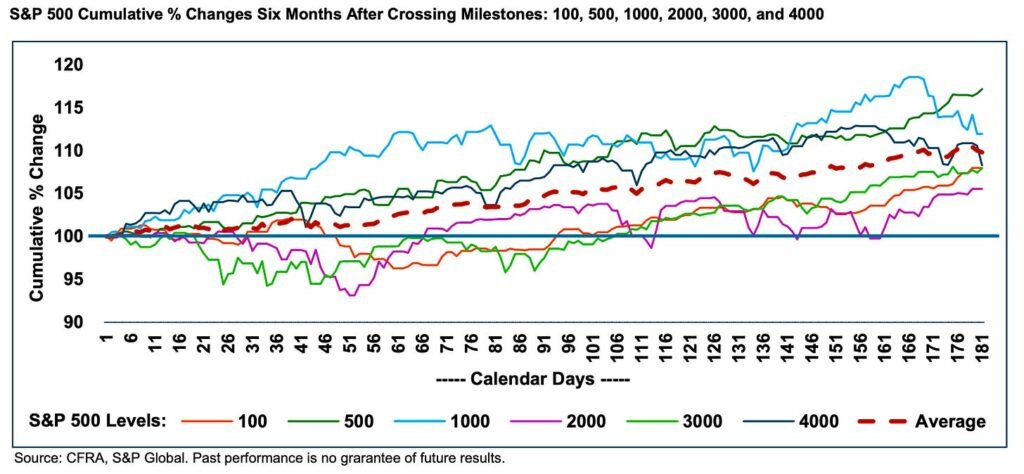
The data is clear: historically, buying at all-time highs has produced returns that are just as strong — sometimes stronger — than buying at other times. Markets spend a significant portion of their time at or near all-time highs, because long-term growth is the default direction of a diversified economy. An all-time high is not a warning sign. It’s what a healthy, functioning market looks like.
3 Reasons Index Funds Still Win in a High-Rate Environment
Even with rates elevated, broadly diversified index funds remain the strongest choice for most beginner investors. Here’s why:
1. You capture the entire market. When you buy a total market index fund, you own a piece of every sector — including financials and energy, which often perform well when rates are high. You’re not betting on one industry to win.
2. Low fees compound massively over time. A fund with a 0.03% expense ratio vs. one with 1% might seem like a small difference. Over 30 years, that difference can amount to tens of thousands of dollars on a modest investment.
3. You remove the guessing game. In a complex macro environment — high rates, elevated valuations, geopolitical uncertainty — the investors who try to time the market or rotate into “safe” sectors consistently underperform those who simply stay invested in a low-cost index.
4 Simple Steps for Beginners to Start Investing Now
You don’t need to understand every nuance of Fed policy to start building wealth. Here’s a simple action plan:
- Open a brokerage account. Platforms like Robinhood require no minimums and let you buy fractional shares, so you can start with whatever you have — even $5. Get started with Robinhood here.
- Choose a total market index fund. VTI (Vanguard Total Stock Market ETF) is a strong starting point — it holds over 3,500 US companies in one fund.
- Set up automatic contributions. Even $50/month invested consistently will outperform most “smart” strategies over a decade. Automation removes emotion from the equation.
- Ignore short-term noise. Rate decisions, earnings surprises, and political headlines will come and go. Your job as a long-term investor is to stay invested and keep contributing.
What to Avoid in This Environment
A few traps are worth naming specifically. First, avoid chasing high-yield bonds as a “safe” alternative to stocks — when rates eventually do fall, bond prices will reprice and many investors will be caught off guard. Second, avoid market timing strategies that promise to get you out before the next crash. The research on market timing is overwhelming: it doesn’t work consistently, even for professionals.
Third, don’t let elevated valuations paralyze you. Yes, the S&P 500’s price-to-earnings ratio is above historical averages. That’s been true for most of the last decade — and the market still produced exceptional returns for long-term investors who stayed the course.
Final Thoughts
The headline — “S&P 500 at all-time highs, no rate cuts coming” — sounds alarming if you’re new to investing. But once you understand what it actually means, the right move becomes clear: stay diversified, keep your costs low, and keep investing consistently. That strategy has outperformed every alternative over long time horizons, and there’s no strong reason to believe 2026 is the exception.
Subscribe to Money Making Hints on YouTube for weekly breakdowns of market news translated into plain English — with clear, actionable steps that any beginner can follow. No jargon, no hype, just practical guidance to help you build wealth steadily.
Affiliate Links: – Robinhood — Open a Free Brokerage Account *(No minimums, fractional shares, easy to set up)*
📺 Watch the full video: https://youtu.be/lxxWC-9Nv9M
🔗 Related posts: how to invest in index funds as a beginner | low-cost Vanguard funds
FTC Disclosure: This post contains affiliate links. If you click and make a purchase, I may earn a small commission at no extra cost to you. I only recommend products I genuinely believe in.
The information in this article is for educational purposes only and is not personalized financial advice. Always do your own research before making financial decisions. Brand names mentioned are for informational purposes only — not sponsored by or affiliated with any mentioned companies.